Published: 06/27/2026
Story by Catherine Wu, Communications Assistant
Interactive Graphic by Tim Jing, MED 194/294 Teaching Assistant
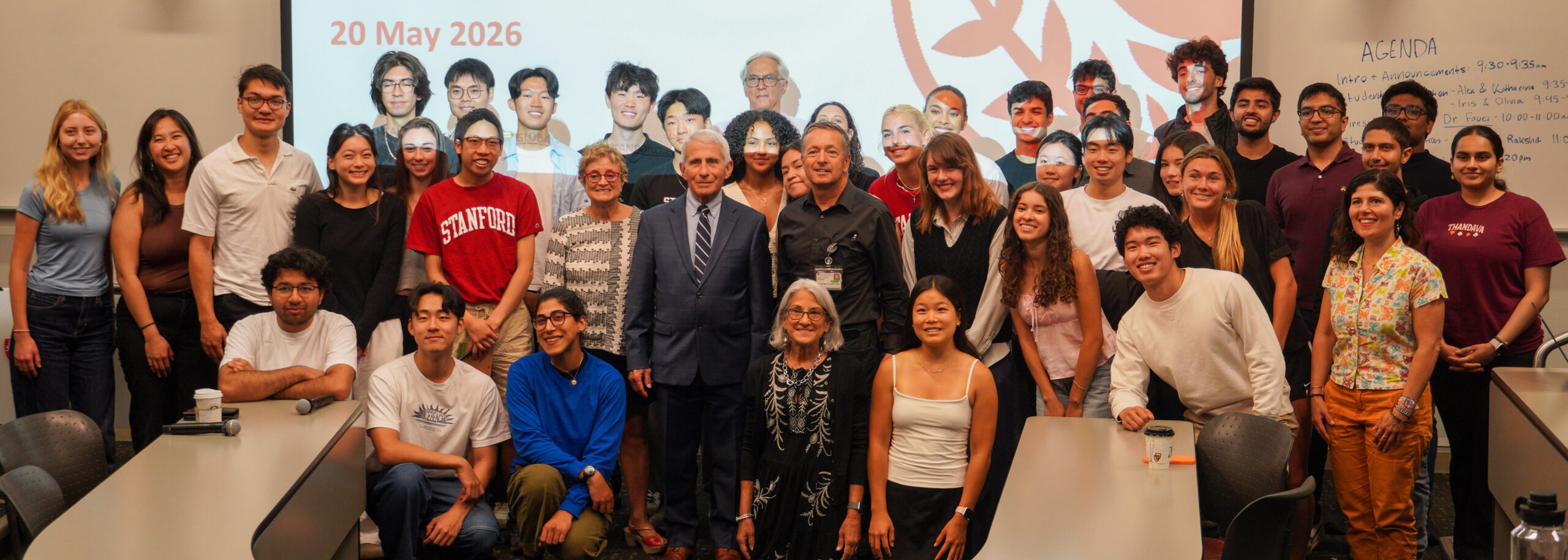
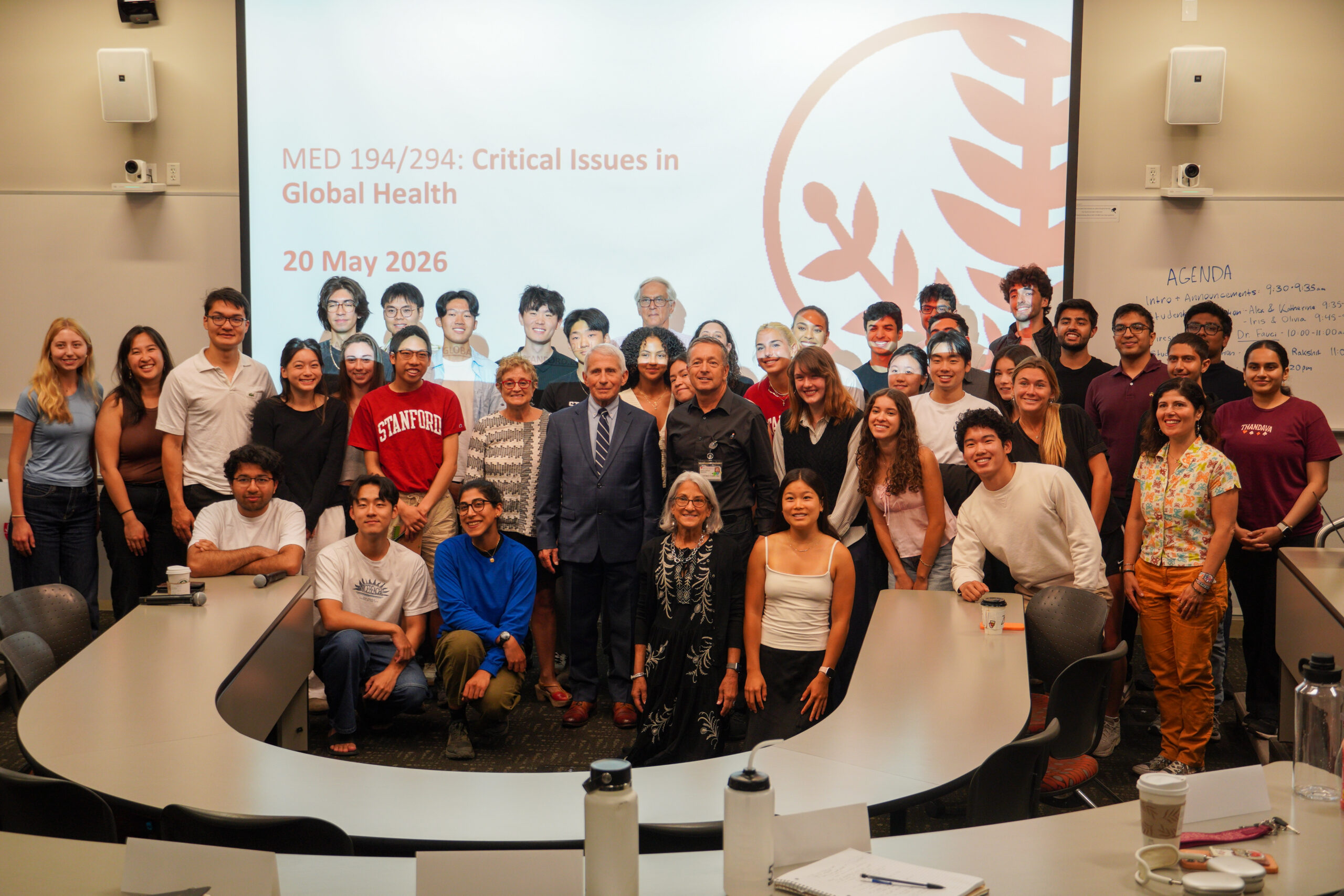
Cover photo: Students in the Global Health course participated in a fireside chat with dr. anthony fauci (Center), Distinguished University Professor at Georgetown University School of Medicine and McCourt School of Public Policy, former director of the National Institute of Allergy and Infectious Diseases, and former chief medical advisor to President Joe Biden. By Lour Drick Valsote
A spring course, “MED 194/294: Critical Issues in Global Health,” invited students to engage in weekly discussions with leading global health thinkers from Stanford and around the world to confront timely issues impacting global health research, funding, and delivery. The course, led by the Stanford Center for Innovation in Global Health (CIGH), leveraged speaker insights and student presentations to explore diverse perspectives on contemporary global health issues through the lens of health equity and social justice.
Open to both undergraduate and graduate students, the course is co-taught by Michele Barry, MD, director of the Center for Innovation in Global Health, Drs. Ben and A. Jess Shenson Professor of Tropical Medicine, and senior associate dean of global health, and Geoffrey Tabin, MD, Fairweather Foundation Professor of Ophthalmology and Global Medicine and co-founder of the globally impactful nonprofit, the Cure Blindness Project.
Speakers included, to name a few: Madhu Pai, MD, a global health leader, health equity advocate, and tuberculosis expert; Mamphela Ramphele, MD, a medical doctor, social anthropologist, and co-founder of The Black Consciousness Movement with Steve Biko that reignited the struggle for freedom in South Africa; and Vanessa Kerry, MD, chief executive officer of Seed Global Health and WHO Special Envoy for Climate Change and Health.
Students were also joined by Anthony Fauci, MD, Distinguished University Professor at Georgetown University School of Medicine and McCourt School of Public Policy, former director of the National Institute of Allergy and Infectious Diseases (NIAID), and former chief medical advisor to President Joe Biden, for a fireside chat on the current state and future outlook of public health.
In his talk, Fauci observed that, in the current public health landscape, we’re seeing “policy driving science, instead of science driving policy.”
We, as a rich country, have a moral obligation to make sure that people don’t die from a preventable or treatable disease merely because of where they happen to have been born and lived.
Anthony Fauci, MD, recalling the words of President George W. Bush on the AIDS epidemic
He also spoke about the events that shaped his approach to public and global health. As director of NIAID, Fauci advised George W. Bush on the AIDS epidemic. He recalled a sentiment that the president shared with him: “We, as a rich country, have a moral obligation to make sure that people don’t die from a preventable or treatable disease merely because of where they happen to have been born and lived.” This philosophy has remained with and shaped Fauci since.
Over the ten weeks of the course, speakers highlighted issues ranging from:
- Women’s leadership in global health (Dr. Barry);
- Biosecurity and pandemic resilience (Milana Boukhman Trounce, MD, MBA, Stanford clinical professor in emergency medicine);
- And context-driven innovation and scaling of impact in global health in the post-AI era (Anurag Mairal, PhD, adjunct professor of medicine and director of global outreach programs at the Stanford Mussallem Center for Biodesign).
Dr. Mairal described a framework for reimagining global health in his presentation on context-driven innovation and scaling.
“It’s a challenge to think of communities as the last mile. If that’s the last mile, what is the first mile? The first mile is the institutions. That means your healthcare system is designed for the institutions, not for the communities, not for the people,” he said.
We need to be thinking about our homes and our communities and our workplaces as the first mile. If we do that, we will see that the healthcare solutions we design would flip. That’s the point about reimagining healthcare.
Anurag Mairal, PhD
“I have started to use the term first mile,” Mairal continued. “We need to be thinking about our homes and our communities and our workplaces as the first mile. If we do that, we will see that the healthcare solutions we design would flip. That’s the point about reimagining healthcare.”
In her talk, titled “How do Nations Heal from Trauma,” Dr. Mamphela Ramphele shared wisdom for students: “It doesn’t matter where you come from… It is not what you don’t have, it’s what you have, and how you use what you have. What you have is your self-respect, your spirits, your brain, your mind, body, and soul, and they join for self-liberation.” Ramphele is a South African activist, medical doctor, academic, businesswoman, and thought leader.
It doesn’t matter where you come from… It is not what you don’t have, it’s what you have, and how you use what you have.
Mamphela Ramphele, MD
During the second half of the course, based on personal interests, students proposed interventions for a health equity issue in a specific country and cultural context to deliver a presentation and compose a final report on. Topics included: inequities in health issues caused by climate change; challenges to equal health care access in the world’s poorest countries; technology development and access in the global south; geopolitical barriers to global health; disability rights; and more.
Students said they gained valuable insights from hearing the speakers’ lived experiences, as well as from their fellow classmates’ presentations.
“You cannot learn global health from a textbook. So, hearing the experiences of thought leaders, physicians, and researchers who have dedicated their lives to the field feels uniquely important,” said Max Yang, undergraduate student and President of the Undergraduate Global Health Club. “I am confident the people I sit with in class will be part of this next generation of global health leaders.”
Taisho Shiono, an undergraduate student who partnered with Yang for a final presentation researching tuberculosis and human immunodeficiency virus, shared similar insights. “Being able to hear diverse perspectives on health, humanity, and equity from experts who have real, global experience has just been so eye-opening. I’ve never left the class not feeling inspired,” he said.
The course runs annually in the spring and will feature returning and new guest speakers next year. Learn more about CIGH courses here.
Explore speaker insights by topic
Click on the dots in the interactive image below to explore speaker insights by theme.